Step back in time as you explore the Museum's lifestyle rooms and vignettes. Together, they recapture the grandeur of a Gilded Age seasonal resort hotel.
The Writing and Reading Room
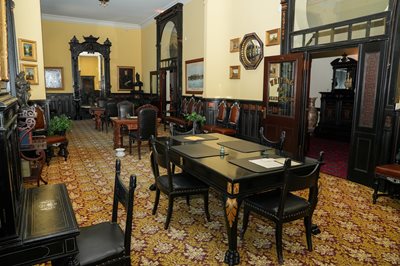
The Writing and Reading Room provided a popular gathering spot for men visiting the Tampa Bay Hotel. Here they could peruse newspapers, attend to their correspondence, and use the door to the left of the fireplace to visit the basement rathskeller for a game of billiards or a drink. The furniture and art are original and in place – just as they were when the Hotel operated in the 1890s. The pale-yellow wall color is authentic, the mirrored ceiling fixtures are exact recreations of the lost originals, and the carpet has been rewoven.
A Well-Traveled Collection
“In furnishing the Tampa Bay Hotel, the art centers of the world have been drawn upon for their treasures in woodcraft, painting, bronzes, marble, and porcelain.”
Hotel brochure, 1899
Henry and Margaret Plant bought art and furniture from all over the world to fill the Tampa Bay Hotel; local newspapers reported that these furnishings filled 41 train cars when they arrived in Tampa. In the United States of the late nineteenth century, social status was directly connected to wealth. Only elite Americans could indulge in world travels, and a taste for expensive objects from faraway lands became a marker of refinement.
Hotel Gardens
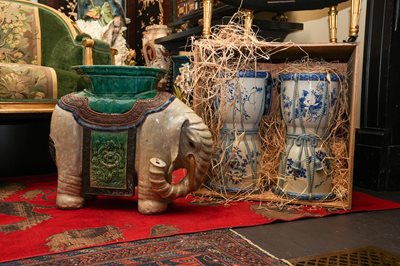
“The walk to the Hotel was paved and along the sides were garden-seats in china making it very beautiful."
Diary of a young Hotel guest, Arabella Hambleton
Henry Plant hired German landscape architect Anton Fiehe to shape the acres of gardens and to fill three conservatories with native and imported plants. Ceramic garden seats provided comfortable resting places for guests during their strolls around the grounds.

The Parlor Suite
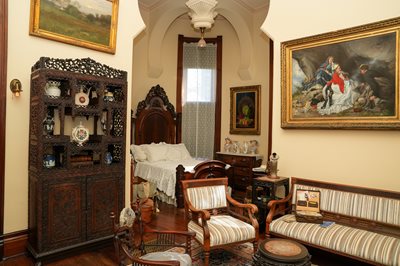
A hallway connects the rooms that make up one of the most desirable suites in the Tampa Bay Hotel. A private entrance added an extra layer of seclusion and exclusivity for the visitors in these rooms. In a time before air conditioning, first floor rooms were reliably cooler than those higher in the building, and corner rooms provided the potential for a cross-breeze through the double-hung windows. Suites like this one could be made even larger by unlocking more of the connecting doors between rooms.
 The Grand Salon
“From the Northern corridor and the rotunda leads the great drawing-room, the ‘jewel casket’ of the Tampa Bay Hotel. Here infinite taste and lavish expenditure have brought together gems from countries far and near, from times old and new.”
The Grand Salon
“From the Northern corridor and the rotunda leads the great drawing-room, the ‘jewel casket’ of the Tampa Bay Hotel. Here infinite taste and lavish expenditure have brought together gems from countries far and near, from times old and new.”
Hotel brochure, 1899
A large public room off the Hotel lobby, the Grand Salon served as a comfortable space for conversation and the admiration of the decorative art that filled the room.The framed carpet in this room came from the Grand Salon, providing a rare example of the Hotel’s original floor coverings.
 Activities and Entertainment
Guests of the Tampa Bay Hotel enjoyed a wide variety of activities – billiards, cards, horseshoes, golf, tennis, boating, bicycling, bowling, and horseracing. Hunting and fishing guides led guests on excursions, and dogs could be rented from the hotel kennels.
 Upper Floors
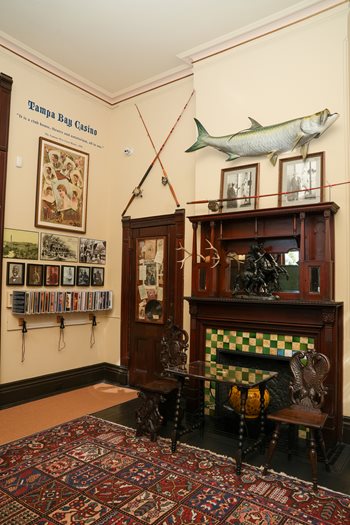
The large cabinet against the wall was, in fact, a mop closet, providing a convenient hidden location for a wet sink and cleaning supplies. The surrounding furnishings are from the second, third, and fourth floor guest rooms. Each room had a fireplace and access to a bathroom with hot and cold running water.
.jpg.aspx;?width=400&height=266 "Upper-Floor-(1).jpg") Dining at the Hotel
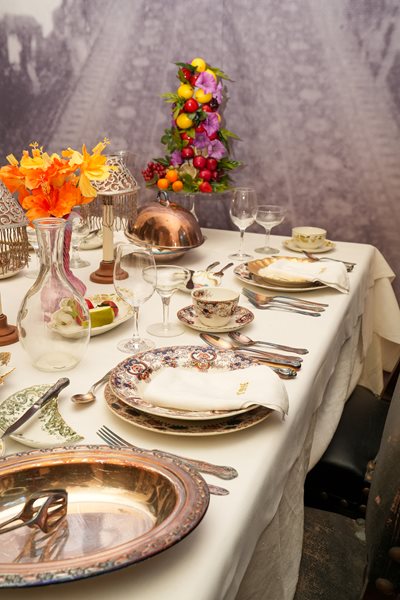
Dining at the Hotel
Much of Hotel social life revolved around the Dining Room and its outstanding cuisine; dinner could last several hours and was often accompanied by an orchestra playing from the balcony. Children and their nannies, as well as personal servants, ate in the Breakfast Room, also called the River Room. The Dining Room of the Tampa Bay Hotel seated 800 guests.
Explore these rooms and more at the
Henry B. Plant Museum!